Directive Dynamics: Linking Card Play Regulations to Chat-Based Guidance and Signup Sequences in Competitive Formats
Morgan Lehmann · Sep 20, 2026
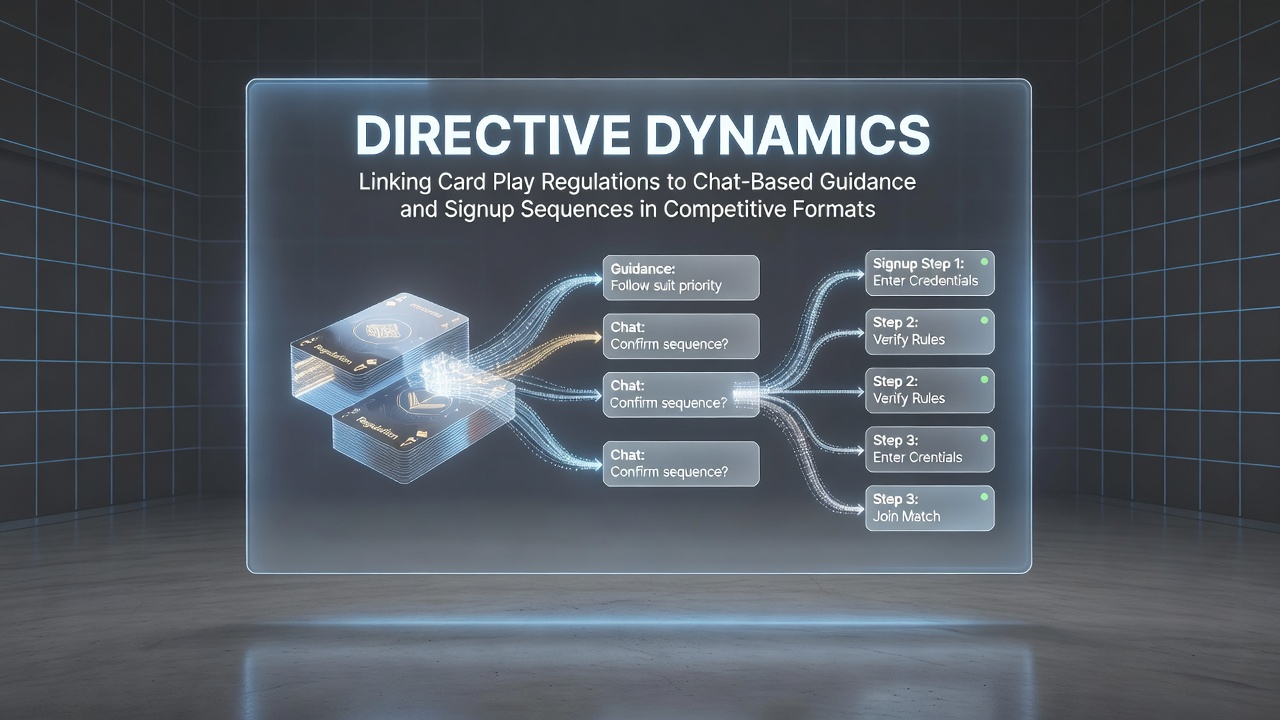
Directive Dynamics: Linking Card Play Regulations to Chat-Based Guidance and Signup Sequences in Competitive Formats
Regulatory frameworks in competitive card formats have evolved to tie specific directives on gameplay standards directly to the mechanics of player registration and real-time assistance channels. Data from the Nevada Gaming Control Board shows that platforms must align signup sequences with identity verification protocols before any card play begins, ensuring that eligibility checks occur at the point of account creation rather than during active sessions. This linkage reduces discrepancies between stated rules and actual participation. Operators structure registration processes to incorporate mandatory disclosures about betting limits, age restrictions, and game-specific conduct codes. Those disclosures appear in sequential screens that feed into backend compliance systems, while chat interfaces serve as the immediate point of contact for clarifying those same rules once play starts. Observers note that this integration creates a continuous compliance thread from initial entry to ongoing engagement.Signup Sequences and Their Regulatory Anchors
Registration flows in major platforms now embed regulatory checkpoints at multiple stages, including document uploads for identity confirmation and acceptance of terms that reference jurisdiction-specific card play statutes. In September 2026 several systems updated their sequences to include automated prompts about new multi-state reciprocity agreements, allowing players to confirm eligibility across borders during the same session. These additions stem from coordinated updates between state regulators and platform developers.
Each step in the sequence generates logs that operators retain for audit purposes, and those records often link forward to chat transcripts when players later seek guidance on the same topics. Researchers at the University of Nevada have documented how such connected data trails improve response times when support agents address questions about rule interpretations during tournaments.
Chat-Based Guidance as an Extension of Directives
Live chat functions operate under explicit guidelines that require agents to reference the same regulatory language presented during signup. When a player inquires about hand-ranking procedures or table-stakes adjustments, agents draw from standardized response libraries that mirror the official directives. This consistency prevents conflicting information from reaching participants mid-session.
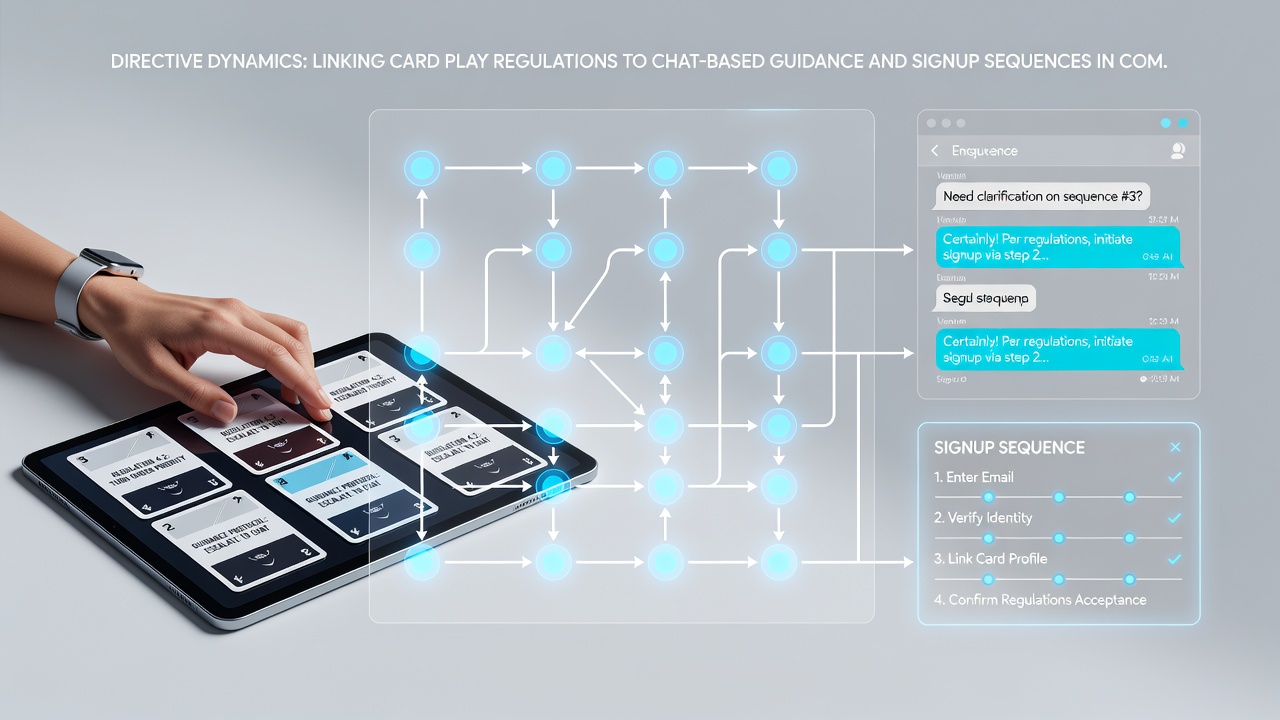
Platforms track chat volume against regulatory categories, revealing that questions about deposit-related eligibility and tournament entry criteria account for a significant share of interactions. Agents receive regular training modules that incorporate the latest directive revisions, ensuring responses remain current with any September 2026 adjustments announced by oversight bodies. The result is a support layer that functions as a live extension of the written rules rather than an informal help desk.
Integration in Competitive Tournament and Cash Game Settings
Competitive formats amplify the need for tight connections between regulations, registration, and chat support. Tournament directors rely on pre-verified player data from signup sequences to enforce seating assignments and blind-level schedules, while chat agents handle last-minute queries about late-registration windows or rebuy rules. Cash game tables follow similar patterns, with platform systems cross-checking account status before allowing seat joins.
One documented case involved a multi-table tournament series where an update to chip-value directives required immediate clarification through chat channels; agents directed players back to their original signup confirmations to verify understanding of the change. This approach minimized disputes and maintained session flow across thousands of simultaneous entries.
Geographic Variations in Implementation
Different jurisdictions apply these linkages with distinct emphases. Platforms serving North American markets often prioritize identity verification tied to state gaming commissions, whereas those operating under European frameworks incorporate consumer protection disclosures at the signup stage and route subsequent questions to specialized chat teams. Australian operators, guided by the Australian Communications and Media Authority, integrate responsible gaming prompts that carry through from registration into live support conversations.
These regional differences appear in the structure of chat menus and the depth of regulatory references agents provide. Data indicates that unified backend systems allow operators to switch compliance layers based on player location without altering the core signup architecture.
Conclusion
The linkage between card play regulations, chat-based guidance, and signup sequences creates a closed compliance loop that platforms maintain across competitive formats. As directives continue to update, particularly around September 2026 changes, the same interconnected systems support both new registrations and ongoing player assistance. This structure ensures that regulatory intent travels consistently from initial account setup through every subsequent interaction.